Buying Ranch And Riverfront Property In Woody Creek
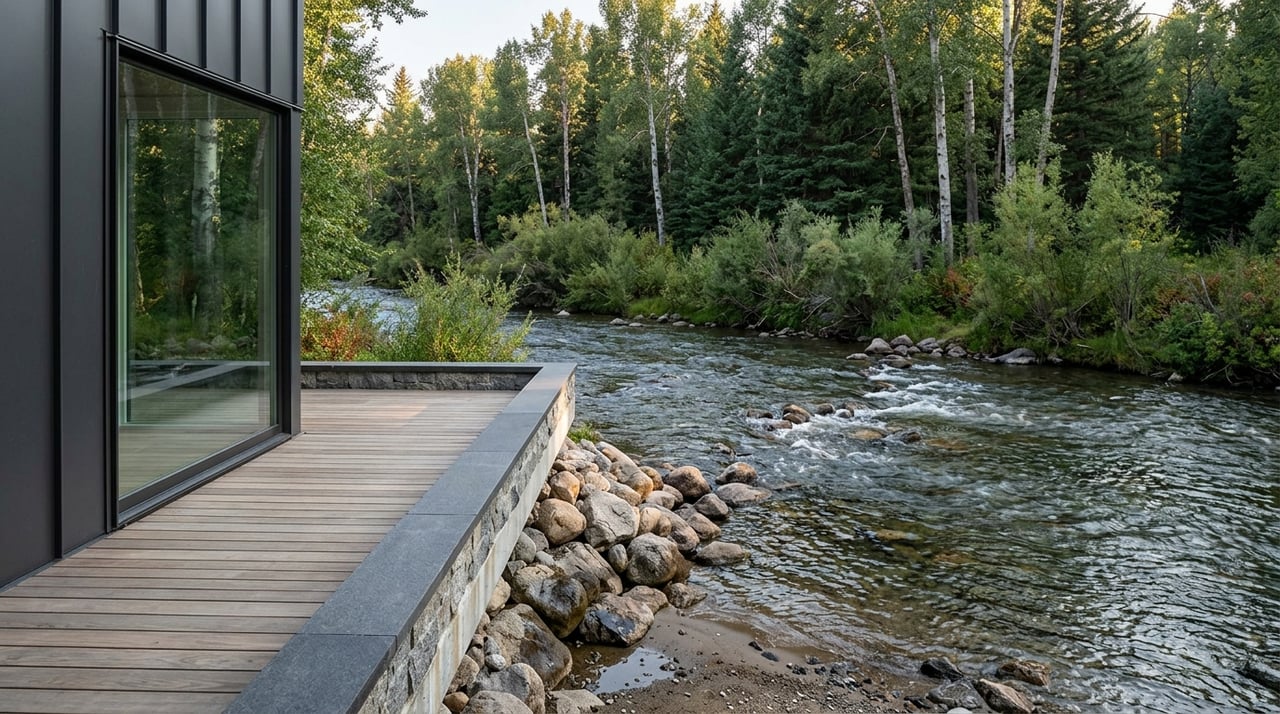
If you are considering ranch or riverfront property in Woody Creek, the appeal is easy to understand. You may be looking for privacy, land, water, and a setting that feels close to Aspen without feeling tied to town. The key is knowing that in Woody Creek, value often comes from what a property can legally support over time, not just what it looks like on first impression. Let’s dive in.
Woody Creek is a low-density rural enclave in Pitkin County with a planning framework centered on slow growth, open space, agriculture, wildlife habitat, and rural residential character. According to the Woody Creek Community Plan, the community is intended to preserve its existing pattern rather than add major new commercial intensity.
That matters when you are buying here. In practical terms, Woody Creek is not a walkability-driven market. It is a place where buyers often focus more on acreage, privacy, river frontage, agricultural use, and the quality of the improvements.
Its location also adds to the appeal. Colorado.com notes that Woody Creek Tavern is about 10 miles from downtown Aspen, which helps explain why the area feels both connected and distinctly rural.
For ranch and riverfront property, the usual value drivers are different from what you might prioritize in town. In Woody Creek, the premium often comes from land, water, privacy, and long-term utility.
Recent market snapshots help illustrate that point. The Aspen Board market report shows Aspen single-family median sale price at $17.0 million in January 2025, while Woody Creek’s 12-month single-family median as of December 2025 was $16.25 million with 8 sales and 7 homes for sale. Old Snowmass, by comparison, posted a 12-month single-family median of $3.83 million with 20 sales.
These are small-sample figures, so they are best used as directional indicators rather than hard rules. Still, they show that Woody Creek can compete with Aspen price levels when a property offers the right combination of acreage, privacy, river frontage, and ranch utility.
River frontage can be one of the most compelling features in Woody Creek, but it also brings another layer of due diligence. Pitkin County identifies wetlands and riparian areas as important buffers for water quality and wildlife habitat, and county guidance on wetlands and riparian areas makes clear that stream setbacks may increase when needed to protect streamside vegetation, wetlands, or habitat.
For you as a buyer, that means the land nearest the water may not be as flexible as it appears. Structure placement, hardscape, grading, and landscaping can all be affected by setbacks and habitat protections.
This is one reason riverfront property should be evaluated as both a lifestyle asset and a regulated asset. A beautiful shoreline is valuable, but so is understanding what can and cannot be done near it in the future.
In Colorado, water rights are a separate and highly important part of the ownership picture. The state follows the prior appropriation system, often described as first in time, first in right, and the Colorado Division of Water Resources explains that water rights are administered through water courts.
Well use also requires careful review. The Division of Water Resources well permitting guidance states that every new groundwater well needs a permit, and in many parts of Colorado, projects involving lawn and garden use, domestic animals, subdivisions, or similar uses may require an augmentation plan.
That can be surprising for buyers. A parcel may have river frontage, irrigation infrastructure, or a functioning well, but that does not automatically mean you can use water in every way you assume.
When you evaluate a Woody Creek ranch or riverfront property, it helps to verify the following early in the process:
The Woody Creek Community Plan also notes that water rights and ditch easements are part of the area’s historic fabric and that applicants should prove adequate water rights before permits for water features are approved. It further notes that water rights can be difficult and expensive to maintain.
Many buyers are drawn to Woody Creek because they want more than a house. You may be thinking about barns, hay storage, equipment buildings, or greenhouse space. Those uses can fit the area’s agricultural character, but county approval still matters.
Pitkin County’s Land Use Code amendments for agricultural buildings explain that certain agricultural buildings may qualify for floor-area exemptions only if they meet specific acreage, height, and use standards. The county may also require agricultural review and an occupancy covenant.
In plain terms, outbuildings may be allowed, but they are not unlimited. If a property’s future value to you depends on adding support structures, that question should be reviewed carefully before closing.
Woody Creek’s long-term planning priorities are important for legacy-minded buyers. The community plan supports conservation easements, preservation of productive agricultural land, and protection of historic ranching areas.
It also states that transfer of development rights should not be used to increase density in Woody Creek, though they may be used to enlarge houses. That distinction can matter if you are thinking about future expansion, estate planning, or long-term family use.
The same planning document is also clear that existing commercial zoning should not be enlarged, no new industrial uses should be allowed, and homes or agricultural structures should not be repurposed as commercial venue properties. If your vision includes mixed-use or event-oriented commercial activity, Woody Creek may not support that path.
Even highly desirable rural properties depend on basic site capacity. The Woody Creek plan notes that septic systems are site-specific and identifies 2 acres as the minimum size considered sufficient to support a leach field, septic system, and well.
That does not mean every 2-acre parcel will function the same way. It does mean that site infrastructure should be treated as a central part of due diligence, especially if you are considering remodels, added structures, or expanded occupancy over time.
In a market like Woody Creek, the best properties tend to combine beauty with legal and physical usability. Understanding both is where smart buying starts.
Privacy is one of Woody Creek’s major draws, but it varies more than many buyers expect. The community plan points to River Road traffic, bicycles, and commercial recreation pressures, and it identifies public river access points such as Jaffee Park, Cerise Ranch Bridge, Pitkin Iron, and the Dart property.
That means not all riverfront settings feel equally private. A property’s relationship to River Road, the Rio Grande Trail, trailheads, and river access points may shape your day-to-day experience just as much as lot size or frontage length.
This is one of the most important reasons to look beyond aerial views and listing language. In Woody Creek, micro-location often determines whether a property feels secluded, active, or somewhere in between.
If you are comparing micro-markets, Woody Creek occupies a distinctive position. It can overlap with Aspen pricing for select single-family properties, yet the rationale for value is usually different.
Aspen often commands pricing around immediate access, established neighborhoods, and in-town convenience. Woody Creek, by contrast, tends to earn its value through acreage, privacy, water, and the potential for long-term stewardship of a rural asset.
Compared with Old Snowmass, recent market figures suggest Woody Creek sits at a much higher price tier. For the right buyer, that premium may make sense because the product itself is different: closer to Aspen, more limited in supply, and often more compelling as a legacy ranch or riverfront holding.
The strongest Woody Creek purchases are usually not driven by short-term trends alone. They are guided by a clear understanding of how you want to use the property now and how you want it to function years from now.
That may mean prioritizing transferable water rights, buildable areas outside setbacks, legal support for agricultural structures, or a parcel position that protects privacy. In a constrained, high-value rural market, these details shape both enjoyment and long-term resilience.
If you are considering buying ranch or riverfront property in Woody Creek, measured guidance matters. Jennifer Banner offers discreet, high-touch counsel for complex luxury purchases across Aspen’s micro-markets, including legacy ranch and riverfront properties in Woody Creek.
Stay up to date on the latest real estate trends.