Aspen Pedestrian Mall at 50 and What’s New Downtown
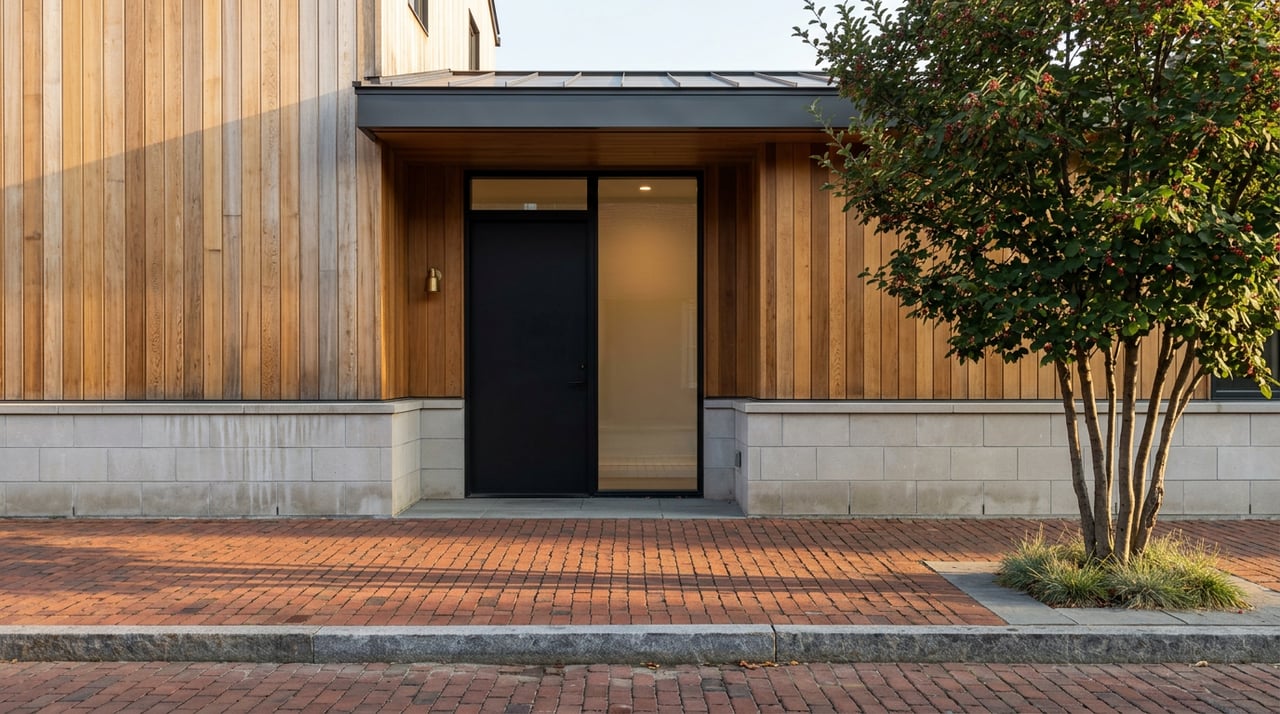
Aspen's brick pedestrian mall turns 50 this year, and the city is quietly out of the material it was built from. There are roughly 16,000 replacement bricks left in the municipal reserve, enough to patch about 3,200 square feet of a mall that covers 144,000 square feet in total, according to reporting from Aspen Public Radio in late June. Once those are gone, there is no original supply to draw from. The worst of the wear shows up at two spots locals already know without looking: the Wheeler Opera House corner at Mill and Hyman, and the block in front of the former Bidwell Building, now an RH construction site across Galena from Paradise Bakery.
A few doors away, the businesses reopening around that same brick this summer chose a different answer to the same problem. They went and got their own scraps back.
The mall's bricks arrived in 1976 by train from St. Louis, a mix of old and reclaimed material that Mike Tunte, the city's landscape architect and construction manager, says now includes pieces more than 100 years old. Tunte told Aspen's Historic Preservation Commission in April that the crumbling brick is "very poetically returning back to the earth," which leaves his department deciding how to patch a historic surface once the historic supply runs dry. That is not a small maintenance note. It is the physical version of a question downtown has been answering all summer in a different medium: what do you do when the original material is gone and the character still needs to hold?
Walk the Mill Street side of the mall this summer and you land in the basement of a building that has been trying to solve exactly this puzzle for five years. The Golden Horn reopened in June in the underground space where the original Golden Horn operated as a Swiss restaurant from 1949 until 1996, a room Gary Cooper and John Denver both walked into in their time. Owners John Bukac and Sam Hayes first had the idea in late 2021, when Eric's Bar announced it would close. They signed the lease in October 2024 and spent the time between building out a room designed by Tim Sack that runs almost entirely on reclaimed Aspen.
The list of what got salvaged and reinstalled reads like a map of businesses that no longer exist:
The bar itself runs 24 feet, which the owners describe as the longest in Aspen, and the walls carry roughly 20 portraits the owners are calling the Aspen Wall of Fame, including Bonnie Rayburn, who ran her own namesake restaurant on Aspen Mountain for 17 years, and Hunter S. Thompson. As Bukac told the Aspen Daily News:
It's approachable food and drink for the workhorses in town.
That is the trick city hall cannot pull off with a sidewalk. You cannot manufacture a 100 year old brick. You can absolutely hang a bar rail pulled out of an old mine and let it do the same emotional work.
None of this happened by accident this particular summer. The pedestrian mall itself turned 50 on June 27, and the city marked it with Mall Fest 50, a parade that staged at Wagner Park at 9 a.m., ran through the mall and the Aspen Saturday Market for an hour, and ended in a block party at Sister Cities Plaza. The City of Aspen closed Galena Street between Hopkins and Cooper for the morning to make room for it, and the day's theme, "What do you love about this place," came with $19.76 specials at participating businesses, a wink at the year the permanent mall was finished.
Aspen Public Art honored six people as pedestrian mall visionaries that day: architect Richard Lai, who pitched the concept to city council after running a ten day demonstration block on Cooper Avenue using railroad tie planters filled with colored gravel and an opened water main that turned the street into a temporary stream; Margot Dick and Katie Dutcher, who were Aspen High School students in 1972 when they sat outside the post office collecting signatures for the referendum that made the mall permanent; Joe Edwards, who handled the legal work for free and later became a Pitkin County commissioner; and Travis Fulton, co-creator of the mall's dancing fountain. The Aspen Times reported that Mayor Rachael Richards read a proclamation at the event, and both Dick and Dutcher flew in from Seattle to see what their high school project had become.
The anniversary programming runs longer than one parade morning. Textile artist Rachel B. Hayes installed Shifting Light, ten large hand sewn panels hung in the tree canopy over Hyman and Cooper, back in May, and they stay up through October, so the piece is still overhead right now if you walk that stretch on a summer evening.
The reuse pattern shows up elsewhere on the same few blocks. Across from Wagner Park, in the space that used to be Maru, a new spot called CHAPS opened this year built around golf simulators, billiards, and a room designed for people to just sit and stay a while rather than a formal dining program. A short walk away, Jazz Aspen Snowmass opened a new permanent home, the Paul JAS Center, above the historic Red Onion on East Cooper. Inside is JAS Café, a small room booking jazz, soul, funk, Latin, and global acts, according to Forbes coverage of the summer's openings. And 520 Grill, a longtime local favorite, relocated this year to sit beside Rio Grande Park, closer to the Roaring Fork River, the John Denver Sanctuary, and the valley's bike trail network than it ever was before.
None of these are new buildings. They are old rooms and old institutions, repositioned rather than replaced, which is the exact opposite of what city crews can do with the last 16,000 bricks.
The mall's own history backs this up better than any anniversary press release could. Aspen paved its dirt streets in 1963 mainly to cut down on dust complaints, tested a temporary car-free block twice in the 1960s before the permanent version stuck, and took four years from city council approval in 1972 to a finished mall in September 1976. Fifty years later, the brick is aging out faster than the city can restock it, and the businesses on either side of it are aging in, on purpose, using whatever pieces of old Aspen they can still get their hands on.
That is the real story of downtown this summer. Not that a mall turned 50. That the block figured out how to keep feeling like itself using someone else's old fixtures, right around the time the mall itself ran out of options to do the same.
If you already live within walking distance of all this and the conversation ever turns from bar rails to real estate, Jennifer Banner is a short walk away too. Schedule a confidential consultation whenever that day comes.
Stay up to date on the latest real estate trends.