Aspen's West End Has a Second Market, and Most Buyers Never See It
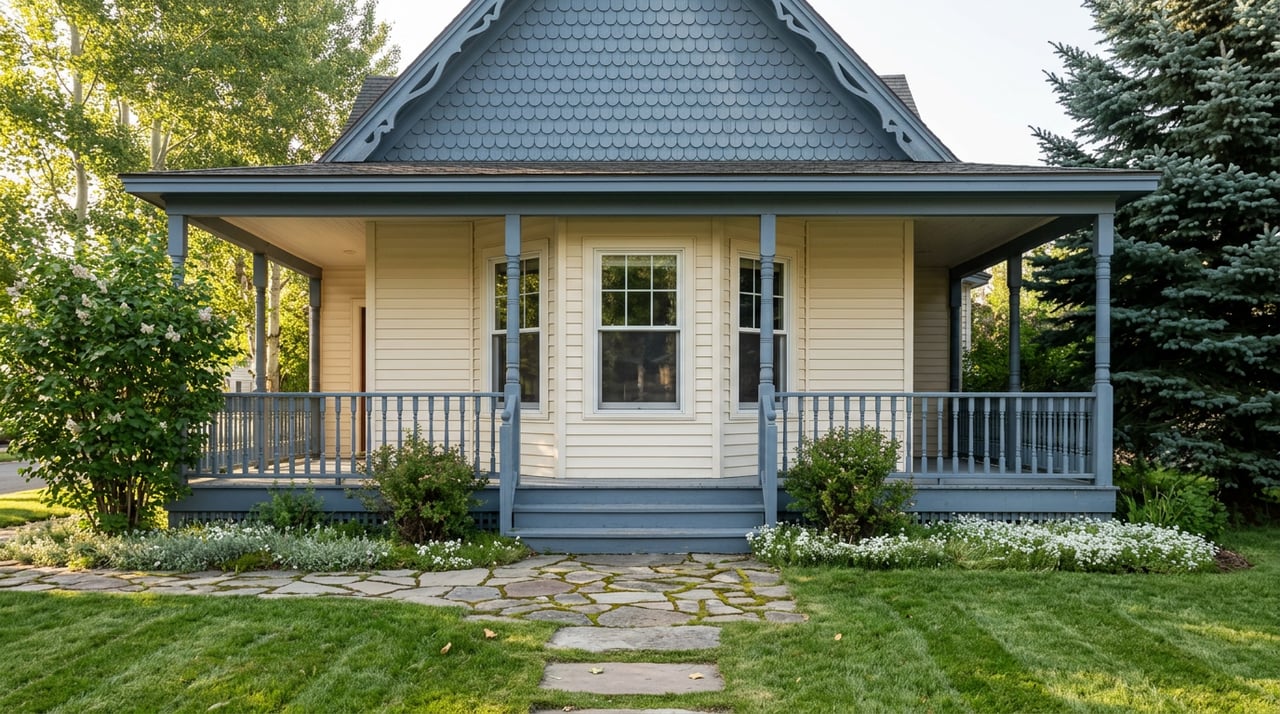
On June 23, 2026, the Aspen City Council approved Ordinance 12, creating a single transferable development right for a small historic miner's cabin at 406 West Smuggler Street. The vote let the owner preserve the cabin while building a duplex behind it, following a recommendation from the Historic Preservation Commission and a presentation from Planning Director Dan Folk. On paper, it reads like routine land-use business. In practice, it is the clearest recent demonstration of something most buyers scanning West End listings never think to ask about: a home's price on paper and its price in reality can diverge by six or seven figures, depending on whether it comes with development rights attached, or needs them purchased separately.
That gap is the real story behind West End pricing in 2026, and it explains a pattern that looks contradictory if you only check the median. Small, historic-designated Victorians here often carry higher per-square-foot values than comparably sized non-historic homes elsewhere in Aspen, even though the historic designation caps how much they can ever grow. The reason is not sentiment about porches and gingerbread trim. It is that Aspen turned a preservation restriction into a tradable commodity decades ago, and that commodity now has a real, quoted, moving price.
Aspen's Historic Transferable Development Right program, codified in the city's land-use code under Chapter 26.535, lets the owner of a designated landmark record a permanent conservation easement that locks the property below what standard zoning would otherwise allow. In exchange, the city issues a TDR certificate for every 250 square feet of floor area the owner voluntarily gives up. Council must approve each certificate by ordinance, the easement gets recorded with the Pitkin County Clerk and Recorder, and only then does the owner receive a certificate that can be sold, assigned, or conveyed to someone else entirely.
The 406 West Smuggler approval followed that path exactly: one certificate, one small historic structure preserved, and one seller now holding an asset that did not exist before the ordinance passed. Pitkin County runs a parallel program dating to the 1990s for rural and open-space land, where each certificate represents 2,500 square feet rather than 250, and where the goal is protecting undeveloped acreage rather than landmark structures. The two programs are often confused because they share a name, but they price differently and serve different parts of the market.
The city's historic TDR program is older than most buyers realize, and for its first two decades it barely traded. In 2004, city long-range planner Chris Bendon told the Aspen Times that although a few brokers and architects had inquired about the newly created program, nobody had yet bought or sold a certificate. The county's parallel program, older and better established, had already logged 130 certificates issued and 47 landed by its own 2003 year-end report, with word-of-mouth sales around $180,000. The city's historic version, by contrast, was untested. Amy Guthrie, the city's historic preservation officer at the time, described the logic plainly:
"If you had a piece of property that only had a little bit of development potential left, you might want to cash in on this."
That logic took years to become a functioning market. By 2021, when Aspen City Council approved a TDR ordinance for a landmark property at 314 West Main Street, council members were still asking staff for a refresher on how landing sites, floor-area increments, and pricing worked. During that meeting, one councilman cited an estimated $510,000 value for three certificates, while other sources put recent city TDR sales closer to $175,000 each and county TDRs closer to $400,000. The program had gone from theoretical to active, but prices were still being discovered in real time, deal by deal.
Then came the run-up. Certificate prices climbed sharply through the pandemic-era building boom of 2021 and 2022, when scarce inventory and aggressive expansion plans pushed county TDRs as high as $2 million to $2.5 million apiece. That peak has since corrected. By 2026, city historic TDRs are trading in roughly the $725,000 to $750,000 range for 250 square feet, and county certificates sit closer to $650,000 to $800,000 for 2,500 square feet. Neither number is set by the city. Pitkin County has said from the start that it treats TDRs as a commodity and lets the free market set the price, the same way it would for any other asset.
| Program | Floor area per certificate | Governing authority | Approximate 2026 price |
|---|---|---|---|
| City of Aspen Historic TDR | 250 sq ft | Aspen City Council, Chapter 26.535 | roughly $725,000 to $750,000 |
| Pitkin County TDR | 2,500 sq ft | Pitkin County Community Development | roughly $650,000 to $800,000+ |
Once you know certificates trade at that scale, West End pricing stops looking erratic and starts looking like two different products wearing the same neighborhood label. A landmark Victorian that has already shed its unused floor area through a recorded TDR is, in effect, selling you a finished, permanently protected structure with no remaining ambiguity about what can be added later. A non-historic corner lot advertised with a demolition permit allocation already secured is selling you something else entirely: a blank canvas, but one that depends on a citywide allotment the city issues in limited numbers each year. Both get marketed as West End real estate. Only one of them comes with a floor-area ceiling that a certificate can raise.
This is also why headline neighborhood numbers can look inconsistent depending on which report you read. One recent market summary put West End's average sale price climbing from roughly $10.98 million to $13.28 million year over year, attributing the gain to demand for historic homes near the Aspen Institute and the Music Tent. A separate source tracking closed sales through May 2026 put the West End median at closer to $18.99 million, up more than 22 percent from the prior year. Both can be true at once in a market this thin, where a handful of very different transactions, some with development rights bundled in and some without, move the average or the median in opposite directions depending on what closed that month.
If you are comparing West End against Red Mountain or the downtown core, the TDR question deserves the same attention buyers usually reserve for title and survey work. A few things to confirm early, ideally before you are under contract:
Does the property already carry a recorded conservation easement, and if so, has the associated TDR certificate already been sold off, or does it convey with the sale? A home that still holds its unused floor area as a certificate you can use elsewhere is worth something different than one where that value has already left the property.
Is there a demolition permit allocation attached to a non-historic lot you are considering, and when does it expire? The city issues only a limited number of these citywide each year, and losing one can add years to a redevelopment timeline.
Does the property fall under the design guidelines the Historic Preservation Commission updated on April 14, 2026? That update, aimed at accommodating energy-efficient upgrades, wildfire mitigation, and affordable housing within historic districts, changes what an owner can do to a landmark structure going forward, and it is worth reviewing before you assume a renovation path is available.
None of this shows up in a standard comparative market analysis. It shows up in the land-use file, the recorded easement, and a conversation with the city's historic preservation staff, which is exactly the kind of due diligence that separates a smooth West End closing from a surprising one.
Do I have to buy a TDR to renovate a historic home in the West End? Not necessarily. Many historic properties still have unused floor area available under their existing zoning, meaning no certificate purchase is required. TDRs become relevant when a property is already built out to its historic-designated cap and the owner wants additional square footage.
Can a West End buyer count on demolition and rebuilding as a fallback plan? Only on non-historic lots, and only if a demolition permit allocation is available. The city limits how many of these it issues each year, so a lot without one already secured may face a longer timeline than a buyer expects.
Are city and county TDRs interchangeable? No. City historic TDRs apply within Aspen city limits and represent 250 square feet each. Pitkin County TDRs apply to unincorporated county parcels and represent 2,500 square feet each. The two programs are governed separately and priced separately.
Understanding which version of West End real estate you are actually buying, landmark protected and rights already monetized, or open lot with a ticking permit clock, is the kind of detail that shapes a negotiation long before it shapes a closing. If you are weighing a West End purchase or considering how much unused value sits inside a property you already own, Jennifer Banner can walk through what a specific address carries in rights, restrictions, and remaining potential. Schedule a confidential consultation to start with the facts specific to your property, not the neighborhood average.
Stay up to date on the latest real estate trends.