Old Snowmass Just Got Officially Dark, and Almost Nobody's Complaining
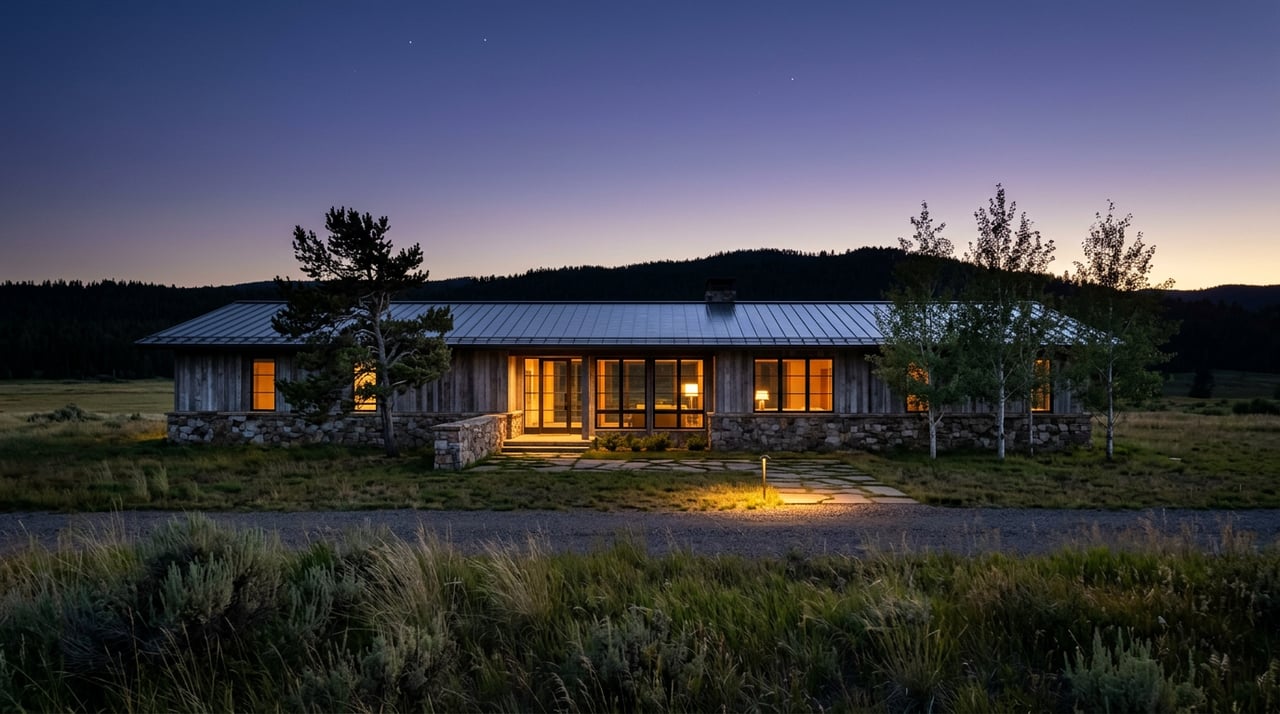
Martha Ferguson woke up early one morning wanting to see Jupiter and Venus hang low near the moon over the eastern ridge above Capitol Creek. Instead, she got two columns of light blasting into the sky from a ranch about a quarter mile away, wiping out the view entirely. She has told the story enough times now that it has become something like local scripture: the moment one resident's bad night turned into a countywide lighting code and, eventually, a designation that put this unincorporated stretch of the Roaring Fork Valley on a very short list.
As of this year, Old Snowmass is Colorado's eighth certified International Dark Sky Community, joining places like Ridgway, Crestone, Paonia and Breckenridge. If you live here, that status is not just a plaque or a press release. It is a set of rules about your porch light, your holiday lights and the hours your exterior fixtures are legally allowed to burn.
Pitkin County's revised lighting code, adopted in early 2025 and now enforced with Old Snowmass's dark sky overlay layered on top, sets a curfew. Most exterior lights have to go dark between 10 p.m. and 6 a.m., with carve-outs for businesses still operating, street lighting and parking areas. If you like to leave a floodlight on for the dog or the driveway, that habit now has a legal window.
The code also caps how much light a single-family home can throw off after dark, calculated at 3.5 lumens per square foot of above-grade floor area, with a hard ceiling of 35,000 lumens regardless of house size. There is a light-trespass limit too: 0.2 foot-candles measured at the property line, meaning your neighbor's window glow is not supposed to be bright enough to register at their fence.
None of this means ripping out every fixture tomorrow. The county built in a five-year amortization window for existing nonconforming lights, so anything installed before the rule change gets time to age out or be swapped during a normal remodel. Holiday lights get their own calendar: residential string lights are allowed from November 15 through January 30, a slightly longer runway than the November 15 through March 1 window given to businesses. County staff have said they will help homeowners with the cheap fixes first, shielded fixtures and diffuser bulbs, before anyone gets a citation.
The push did not start with the county. It started with the Snowmass Capitol Creek Caucus, a neighborhood nonprofit that has been advocating for the valley's rural character since 1974, and with Ferguson herself, who founded the volunteer group WildSky Old Snowmass after that frustrating morning. She spent roughly a year and a half lobbying commissioners, consulting on code language and doing outreach to neighboring caucuses before the county finalized its lighting rewrite.
The timeline matters because it shows this was not a top-down mandate dropped on a community that never asked for it. The caucus and WildSky brought the proposal to Pitkin County, and the county's planning staff worked alongside them on both the ordinance language and the eventual application to DarkSky International. When the certification came through in February, DarkSky's Community Program Manager Michael Rymer credited the pairing of grassroots advocacy with an actual lighting ordinance, calling it a model for how other communities in the county might follow.
"Our intention is to safeguard the health of our residents and the survival of wildlife that depends on the dark of night," Ferguson said in the release announcing the designation, calling the certification proof of what the community's collective effort had accomplished.
The reaction on the ground has been mostly supportive. Coverage of the certification noted that residents who fell out of compliance mostly did so by accident, not out of resistance, and that concerns about safety from wildlife or intruders were the main pushback the county heard. WildSky's counter to that has been consistent: more light does not reliably deter anything, and the fixes on offer, shielded downward-facing fixtures and warmer bulbs, solve the safety concern without blasting a beam into the next property.
Here is the part that makes Old Snowmass's dark sky year interesting rather than merely nice. In the same stretch of months this lighting story played out, the valley also produced the most expensive residential sale in Pitkin County history.
St. Benedict's Monastery, a 3,739-acre property along Capitol Creek Road that Trappist monks had called home since 1956, closed its doors after nearly 70 years of daily prayer, agricultural work and interfaith gatherings that once drew religious leaders from around the world. The order's leadership voted to close the monastery back in 2022 as its population of monks aged and dwindled, and the property came to market in the spring of 2024 with a list price of 150 million dollars. It sold that December for 120 million dollars to a Delaware LLC that reporting later tied to Palantir CEO Alex Karp, a deal recorded through the Pitkin County Clerk and Recorder as the priciest residential transaction the county has ever seen.
The final public Mass was held January 11, 2026, drawing several hundred people who came to say goodbye to a place that had also hosted the Snowmass Interreligious Conference for more than three decades under the leadership of Father Thomas Keating, one of the founders of the modern centering prayer movement. Keating and fellow spiritual leader Father Joseph Boyle are both buried on a slope above the chapel, and the sale terms include an access easement so family members and fellow Trappists can still visit the graves, though future visitation could be subject to restrictions the new owner sets.
The property is zoned RS-30, which on paper could allow for more than a hundred dwelling units, though any conversion to that kind of density would require a long and complicated land-use process through the county. For now it remains one intact tract of undeveloped acreage along Capitol Creek Road, the same road WildSky's advocates cite as one of the best places in the valley to actually see the stars.
A record-setting land sale and a mandatory porch-light curfew look like unrelated stories if you only skim the headlines. Read them together and they say the same thing about what this particular stretch of the Roaring Fork Valley values. Old Snowmass residents did not fight to protect their night sky because the land was cheap and undesirable. They fought for it in the same period a buyer paid 120 million dollars for a piece of that same valley, precisely because the land's value depends on staying open, dark and quiet. The lighting ordinance is a legal mechanism for the exact quality that just commanded a record price a few miles up the road.
That is not a coincidence unique to one billionaire's purchase. It is the pattern of a community that has spent decades leaning on conservation easements, caucus advocacy and now a formal dark sky designation to keep development pressure from eroding the thing that makes the valley worth living in to begin with.
If you want to see what all this legislating was for, the valley gives you a few reliable options. Capitol Creek Road, Watson Divide Road and Owl Creek Road all offer wide, unobstructed views once you get past the last porch light. Summer through early fall tends to bring the clearest conditions, with the Milky Way visible in enough detail to actually trace its shape rather than just guess at it.
Before you head up, the Old Snowmass Market and Liquor Store across from the park-and-ride on Highway 82 is the practical stop for gas, coffee and a made-to-order burrito, run by Javier Gonzales Bringas and Laura Maine, who also own Tempranillo in Basalt. It is a small, unglamorous detail, but it is the kind of local knowledge that separates an actual resident from someone reading a tourism brochure.
A few habits worth adopting if you have not already: swap any unshielded floodlights for downward-facing, fully shielded fixtures, stick to warmer bulbs where you can, and remember the November 15 to January 30 window if you are the type to keep holiday lights up a little past New Year's. None of it requires giving up outdoor lighting altogether. It just requires aiming it at the ground instead of the sky.
Old Snowmass did not choose between its identity as ranchland and its appeal as some of the most sought-after real estate in the county. It legislated a way to keep both intact, porch light by porch light. Whether you have lived here for decades or you are still learning which roads to take after dark, that is a piece of neighborhood history worth knowing before your neighbor's new floodlight becomes your problem.
If you are curious what any of this means for property in Old Snowmass or the surrounding Capitol Creek Valley, Jennifer Banner has spent years tracking how conservation, zoning and land use shape value in this exact corner of Pitkin County. Schedule a confidential consultation to talk through what you are seeing on your own stretch of road.
Stay up to date on the latest real estate trends.